

Building Tomorrow: Life Cycle Assessment in Construction and Real Estate

Today’s chosen theme: Life Cycle Assessment in Construction and Real Estate. Explore how LCA reframes design, investment, and operations to align carbon, cost, and comfort. Join the conversation—subscribe, share your questions, and tell us your LCA priorities.

Why Life Cycle Assessment Matters Now

An LCA traces impacts from raw material extraction through manufacturing, construction, operation, maintenance, and eventual deconstruction, with circular scenarios modeling reuse. It works best when decisions are still flexible, so start early, iterate often, and keep assumptions transparent.

Why Life Cycle Assessment Matters Now

Standards like EN 15978 and rating systems such as LEED and BREEAM encourage consistent accounting, while public clients increasingly demand EPD-backed procurement. Anticipating disclosure and performance rules creates advantage instead of scrambling once requirements suddenly arrive.

Defining the System Boundary

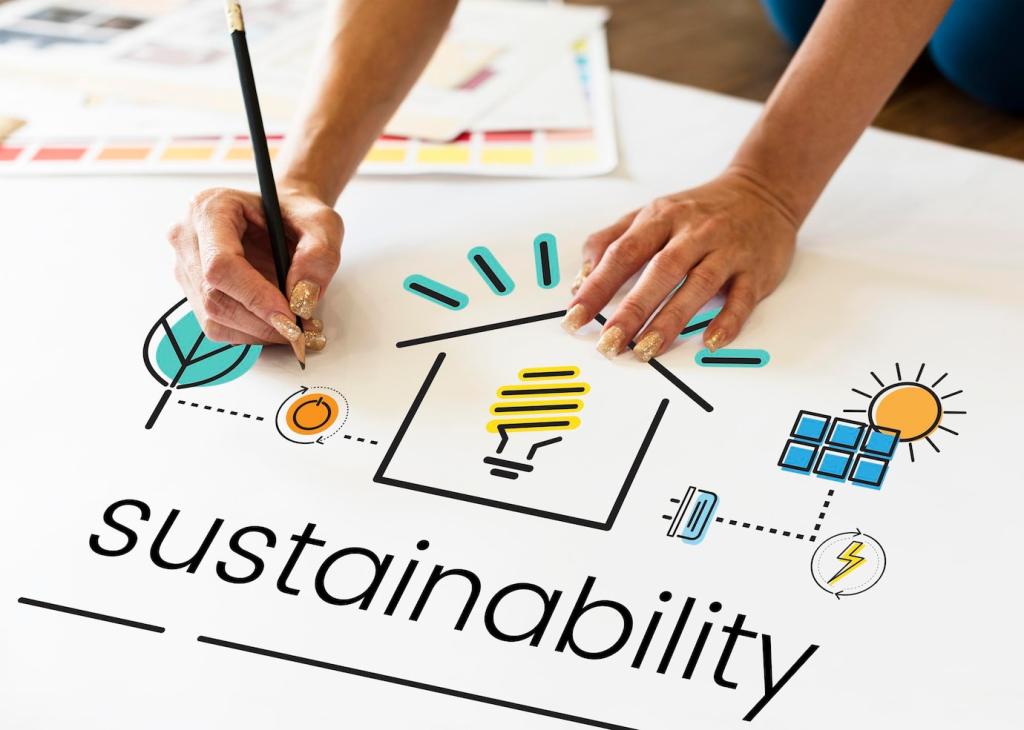
Include high-mass materials and MEP systems, but also operational energy, refrigerants, water, transport, and replacement cycles. A thoughtful boundary prevents shifting impacts elsewhere and protects credibility when stakeholders examine trade-offs and interrogate the reasoning behind key decisions.

Defining the System Boundary

Using EN 15978 clarifies stages: product and construction (A), use and replacements (B), dismantling and disposal (C), and benefits beyond the system (D). Label each scenario clearly so readers can trace assumptions, compare options, and understand the timing of impacts.

Materials and Embodied Carbon

Lower-clinker cements and supplementary cementitious materials—slag, fly ash, and calcined clays—often cut emissions substantially. Combine mix optimization with performance testing, and request plant-specific EPDs that reflect transport distances, curing conditions, and realistic strength development timelines.

Materials and Embodied Carbon

Recycled-content steel, responsibly sourced mass timber, and hybrid systems unlock structural efficiency and design elegance. Consider fire strategy, acoustics, durability, and biogenic carbon accounting conventions to keep comparisons fair and specifications honest across competing structural schemes.

Operational Energy, Comfort, and Water

Connect energy modeling to LCA so envelope, HVAC, and controls choices reveal carbon and utility effects simultaneously. All-electric designs with efficient heat pumps and robust envelopes cut emissions today and align with cleaner grids in the decades ahead.
Use location-based and market-based factors to test credible futures, not just today’s snapshot. Pair efficiency with renewables, demand flexibility, and storage to manage uncertainty and strengthen resilience without overstating avoided emissions in glossy presentations.
Cooling towers, fixtures, and on-site reuse strategies affect both energy and water footprints. In water-stressed regions, efficiency and recovery deliver outsized environmental benefits, reduced operating costs, and improved reliability throughout the building’s long service life.
Reversible connections, standardized fasteners, and accessible layers make components recoverable. Salvage value, adaptable grids, and flexible partitions reduce obsolescence, helping materials stay valuable and lowering future carbon when spaces inevitably evolve or tenants rotate.
Digital material passports and QR tags catalog composition, EPDs, and maintenance history. Future teams can reclaim elements faster, turning demolition into procurement and replacing wasteful practices with a predictable, lower-carbon stream of recovered components.
Account for benefits beyond the system without double counting. State reuse rates, downcycling losses, and market constraints openly so credits encourage real-world recovery and do not inflate results beyond what projects can credibly deliver.

Real Estate Decisions Powered by LCA

A developer piloted a mass timber frame after early LCA revealed meaningful embodied carbon reductions and faster assembly. Tenants valued the warmth, leasing accelerated, and the evidence anchored a clear, credible story for lenders and city reviewers.

Getting Started and Staying Engaged

Choose a live project, run a focused 60-day LCA sprint, and publish a simple baseline. Invite feedback across design, construction, and operations, then prioritize the three moves with the highest combined carbon and cost impact.

Getting Started and Staying Engaged

Bring architects, engineers, contractors, facility managers, and finance to the same table. Use LCA software linked to BIM and specifications, and require EPDs in procurement so data stays current and decisions remain accountable throughout delivery.

Getting Started and Staying Engaged

Subscribe for practical examples, checklists, and updates. Share your case studies or questions in the comments, and tell us which LCA trade-offs you are wrestling with so we can explore them together in upcoming posts.
Oilodevks
Privacy Overview

This website uses cookies so that we can provide you with the best user experience possible. Cookie information is stored in your browser and performs functions such as recognising you when you return to our website and helping our team to understand which sections of the website you find most interesting and useful.